Visioning Thrutopias
My first collage exhibition in Berlin + RSVP!


I’ve never been much of a fan of any single movement that presents visions of the future that feel static and final, and I’ve always been wary of leaders who promise a clear blueprint to utopia. I think it’s dangerous when we do the imagining for others, and even more so when we blindly follow those leaders in their plan to enact those imagined futures. As my colleague and founder of the Centre for Climate Psychology, Steff Bednarek writes:
In the climate and sustainability space, many approaches invite us to imagine the future we desire. The logic is seductive: if we create a compelling enough vision of the future, we will be motivated to work towards it and emerge from this time of interconnected crises into a world where we live in harmony with nature and each other. The dysfunctional, destructive, selfish, reactive aspects of human nature are thought to become negligent if we create a compelling enough vision.
While dystopias tend to leave us powerless and paralyzed, utopias are often idealized and unattainable images of the future. What they both fail to do is help us imagine what Stuart Kauffman called the ‘adjacent possible’, or a set of immediate possibilities that are within reach from where we are today, to help create the lifeworlds we long for.
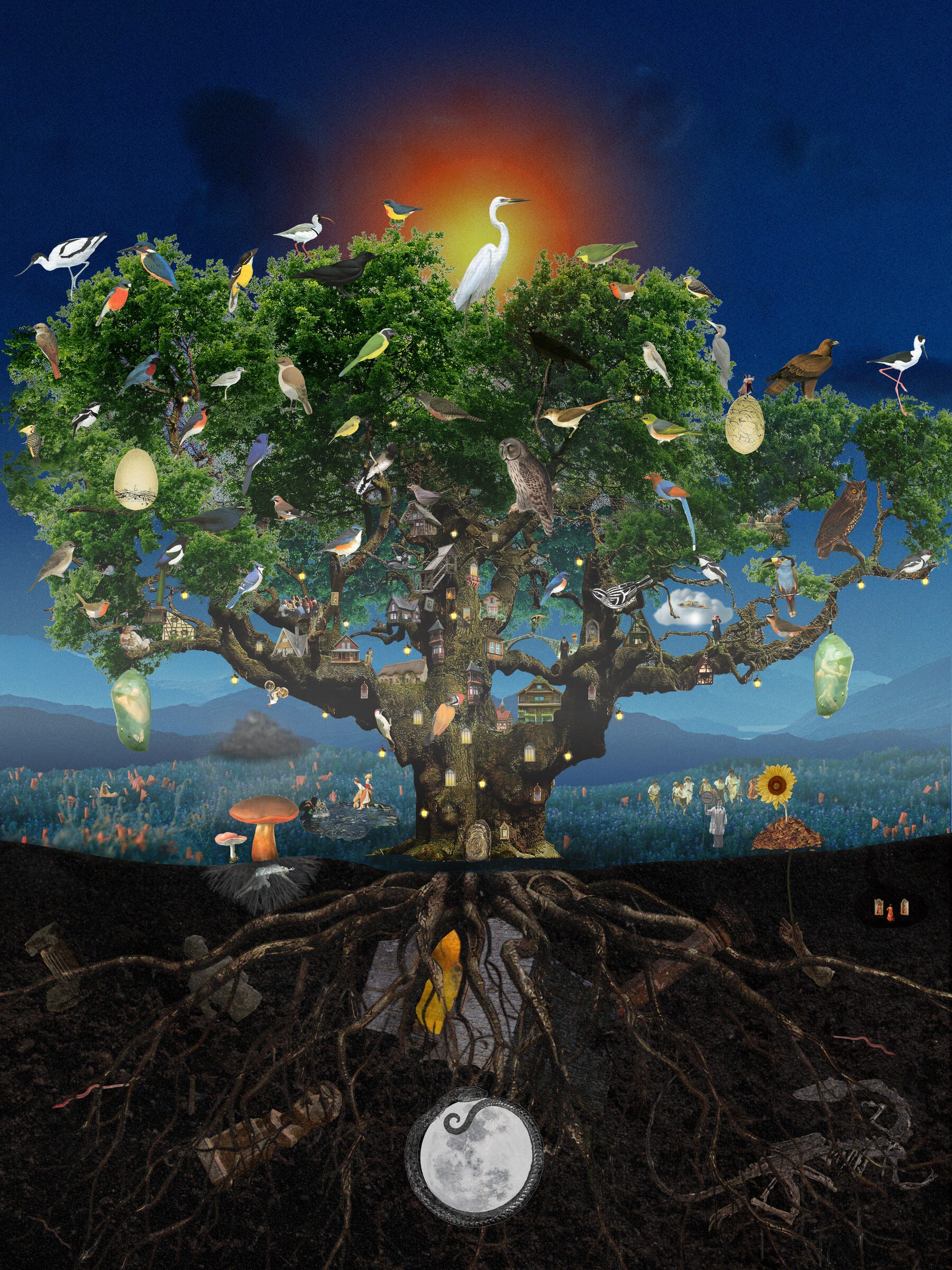
I love butterflies. They’re all over my collages. Butterflies are colorful, extremely diverse, and come in all kinds of shapes and colors, and, like bees, they are pollinators who play an essential role in keeping our ecosystems healthy and alive. But butterflies are also miracles; no wonder that in ancient Greek, the word psyche means both butterfly and soul, and psyche, too, means “breathe” — the wind and oxygen that connects us all. But so much of our discourse centers on the wondrous incarnation that emerges intact from metamorphosis, and not on the fragile, and unmistakably painful process the caterpillar goes through to devour all it can in preparation for its transformation. Only to have your entire body and being disintegrate into a genetic soup, without an external promise of salvation or self-improvement. Spun in a cocoon that hangs by a thin, silken thread from a branch or twig, exposed and extremely vulnerable. Less than 10% actually make the journey.
So yes, I do love butterflies, but even more so, I love the journey a life takes to face death, to descend, to disintegrate, and emerge transformed and never the same. And this is part of why I have grown to love the notion of “Thrutopias”.
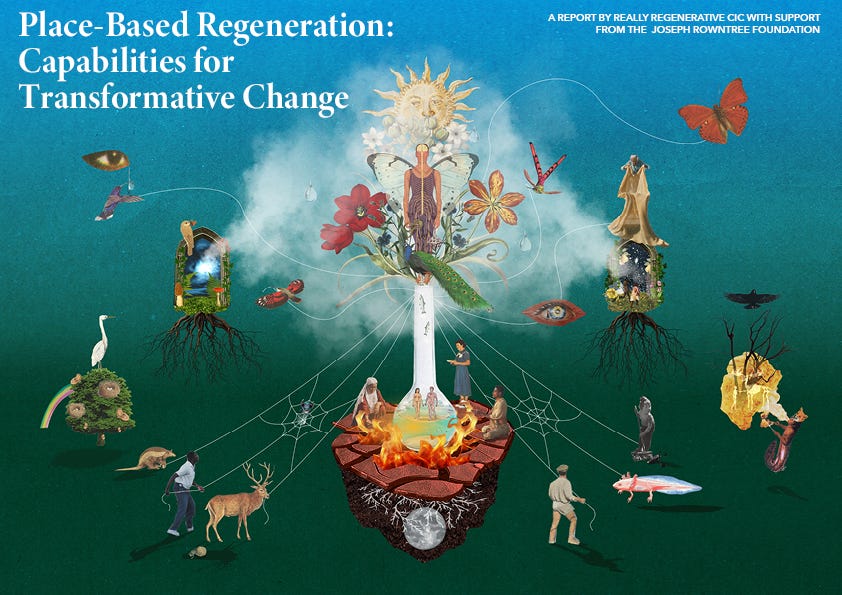
Coined by Rupert Reed, Thrutopias articulate the core ingredients of a world worth aspiring to. Rather than sidestepping complex challenges, a thrutopia works through them head-on. As Reed writes: “We need ways of seeing, understanding, inhabiting, creating what will be needed for the very long haul. Visioning the politics and ecology of getting through.”
I named my upcoming exhibition Thrutopia precisely because it is at the heart of my art and design collaborations with leading regenerative organizations, such as otherWise, Regenerators, Really Regenerative CIC, and Arising Quo. They waymark the world between worlds — between the unraveling of modernity and the more beautiful futures our hearts know are possible.
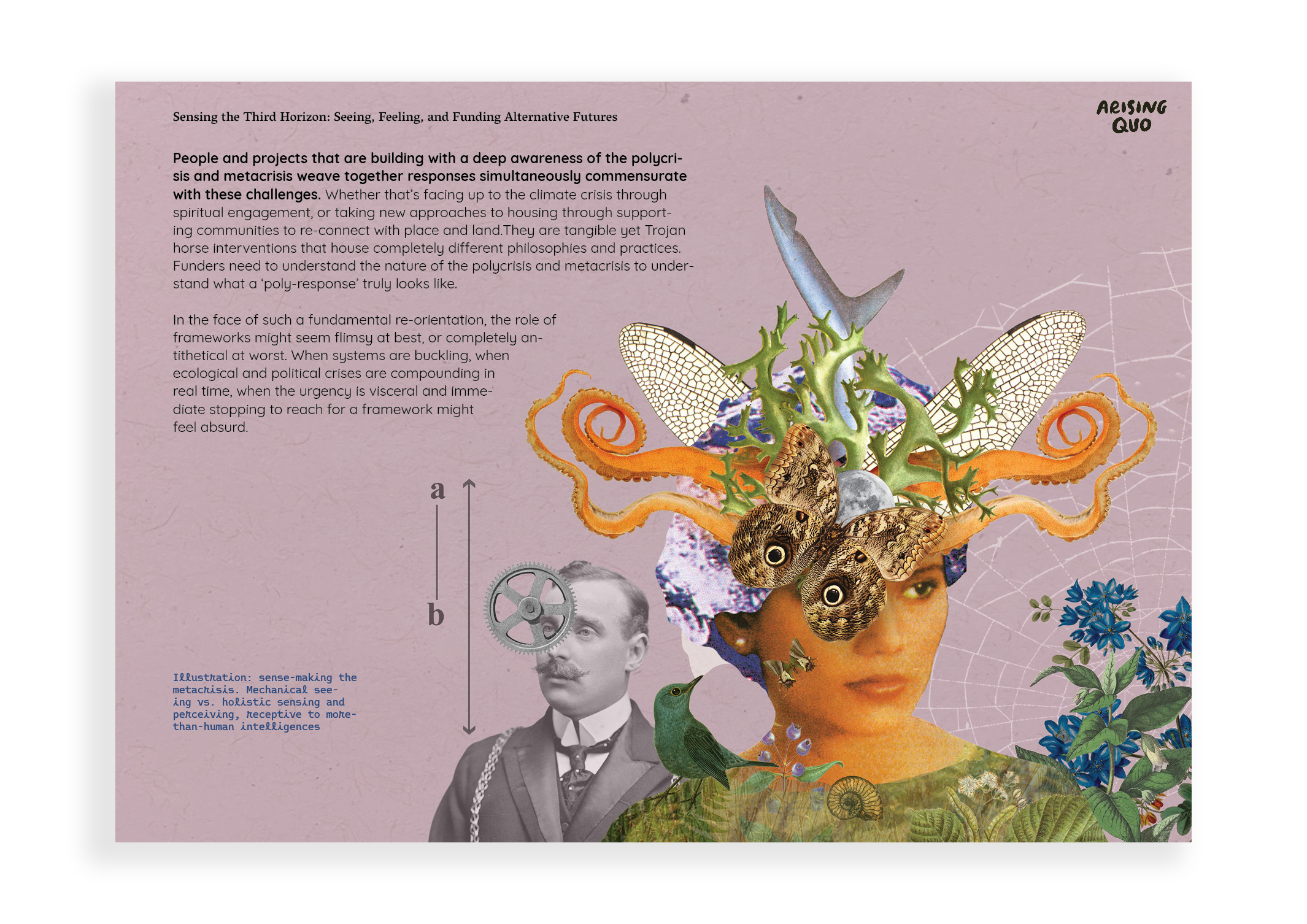
Working with essence and energy, I create images that approach our times through the lens of archetype and myth. Using old magazines and books, the collages gesture towards what it feels like to inhabit thresholds, hold dualities, co-inhabit place with our more-than-human kin, and evolve alongside them.
I’m so excited to share these artworks with you and tell more about the projects and people who are actively working to create “thrutopian” responses to our ecological predicament. Join me on May 29 at C-SPACE Berlin for the vernissage!
For my friends and followers in Belin, RSVP to add the exhibition opening to your calendar and receive updates. This also helps us plan and organize.

 | A guest post by
|
 | A guest post by
|